Showing posts with label Governor-General's Award for Poetry. Show all posts

Thursday, 27 December 2012

Monkey Ranch


Julie Bruck's GG-winning Monkey Ranch was, for some, one of the best poetry books of the year—a return to form after a 13-year interruption. Stewart Cole, however, lay outs some of his concerns with the book:
"When thinking of traditions or poets to which I might ally Bruck’s work (besides the lineated near-prose that characterized much of the dominant mode of Canadian poetry from the 1960s to at least the 1990s), I settle on Elizabeth Bishop, who serves as the subject of a poem in both The End of Travel and Monkey Ranch. Indeed, Bruck's prosy free verse stands above so much similar work because of her Bishopesque powers of observation and phrasal care. On the other hand, however, Bruck is like Bishop purged of not just her formal virtuosity—Bishop excelled at even the most difficult fixed forms, while Bruck doesn’t attempt them—but her eccentricity: nothing in Bruck's body of work is as unabashedly strange as 'The Man-Moth,' for instance, nor does she favour the sort of daring rhetorical leaps that lift 'The Fish,' for example, into its 'rainbow, rainbow, rainbow!' moment of transcendence. Instead, whether formally, rhetorically, emotionally, or politically, Bruck's work tends toward the safe route, rarely off-putting readers with any outlandishness, but lacking the sense of hazard that marks the artform at its best. To use a sports analogy: Bruck’s poetry often reads like it's playing not to lose."

Wednesday, 31 October 2012

James Pollock

James Pollock has what one of my uncles would have called, with a laughing shake of his head, a "horseshoe up his ass." With the ink barely dry on its pages, Sailing to Babylon—his debut—nabs a nomination for this year's Govenor General's Award for Poetry. It then catches the attention of Michael Lista (no mean feat) who, in the National Post, praises its "vision of an old world, freighted with history, and still able to astonish itself with the novelty of its recurrence." Next month, James will publish You Are Here, a fearless, brilliant book of criticism on Canadian poetry that will help drag the whole sorry spectacle into the 21st century. He reads for the Atwater Poetry Project this Thursday. Don't miss it.

Saturday, 12 November 2011

GG's A-OK

Paul Vermeersch brushes aside his doubts and finds a lot to like in this year's GG shortlist. I think he's indulging in wishful thinking when he calls it "one of the most balanced poetry short lists" he's seen, but I agree with the motivating premise of his review: namely, that we not let controversy distract us from recognizing the genuine merits of the nominees. To my own surprise, I share his enthusiasm for Killdeer. Phil Hall's poetry has never been my cup of tea. But he has written a captivating odd-duck of a book—part j'accuse, part literary criticism, part autobiography—and I would never have read it had it not been selected. I tip it to win too.

Thursday, 10 November 2011

More Praise


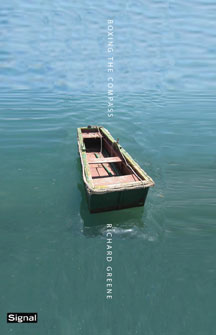
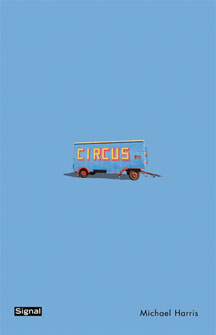
Assessing last year's GG poetry shortlist with an open-hearted attentiveness to each of the books, Patricia Keeney has some very kind words for Circus ("an energetic high-wire act that runs on the adrenalin of reforming zeal and the comic anger of satire") and Boxing the Compass ("Technically accomplished, the poems are uniformly paced and assured, telling their stories easily, conversationally.")

Friday, 15 April 2011

Green Day


Two more Richard Greene interviews have surfaced recently (aside from this one, I mean). A quickie with The Toronto Quarterly (which comes with a nice except from Boxing the Compass) and a longer chat with Rob McLennan, in which Richard describes his work as "an odd mix of religious vision, gags, social satire, and elegies." I wish I'd thought of that for the back cover!

Monday, 11 April 2011

No Respect

Delighted to see Brian Busby's biography on John Glassco get some well-deserved praise from Stephen Henighan in The Walrus. But it's bizarre: you would never learn from this review -- as you certainly do from Busby's superlative book -- that Glassco is one of Canada's indispensable poets. There's a funny irony to arguing that "the best of Glassco’s work...remained hidden from the public eye" in a piece that reduces one of the very things "hidden from the public eye" -- namely Glassco's poetic achievements -- to a dozen words tacked on at the end. Worse, Henighan even gets that wrong. Glassco won the GG in 1971.

Sunday, 10 April 2011

Sunday Poem


THE BEARDED LADY

I shaved, once. All over. Took a lover
much younger than me—and not for his
conversation. I wanted the feel of a tongue
running over a mouth, slowly—but not
his tongue over my lips, nor mine over his:
I wanted his whole body licking like a tongue
over every new surface of mine. Trouble was,
my stubble. The kid got rug-rash. Carpet-burn.
By the end of the night, the boy looked—uncooked.
When his own sweat began to roast him in salt
he fled to the showers. Haven’t seen him since.

Some time later I married a man
with a skin condition. The soft moss of my belly,
the fur on my face—all titillate the scaly
hide of The Alligator Man. I’m prickly and hirsute.
He’s tough as shoe leather. Neat,
how things turn out.

From Circus (2009) by Michael Harris.

Saturday, 2 April 2011

Greene Interview

Over at Northern Poetry Review, Carmelo Militano interviews Richard Greene on his GG-winning book, Boxing the Compass.

"Here are all these Canadian poets -- I'd say nearly half -- entertaining religious beliefs that they fear to talk about in poetry. It is like earlier centuries fearing to talk about sex in poetry. Even so, technique is learned from other poets, and if the religious themes are in disrepute, it is very hard to develop, in relative solitude, a technique for addressing them. It is something I think about a fair bit."
More here.

Tuesday, 30 November 2010

Monday, 29 November 2010

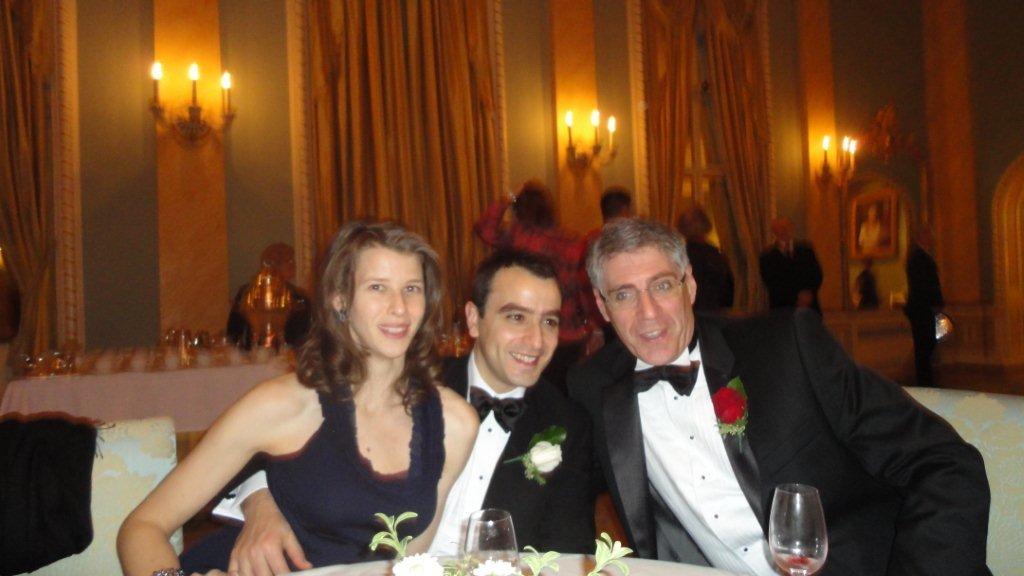
Black Tie, Long Dress

Simon and Richard in the green house.


These lovely ladies (starting from the left) are my wife, Jennifer Varkonyi, and Richard's wife, Marianne Marusic.


Monday, 22 November 2010

Sparring Partners

For the last six years, Alex Good’s annual Runaway Jury—the provocative shadow jury he convenes to vet the GG poetry shortlist—has been one of the highlights of the Fall awards season. Good took a sabbatical in 2009, but he’s back again with a pair of fresh recruits: Jacob McArthur Mooney and Brian Palmu. This year's Runaway Jury is of special interest to me, of course, because Signal had two books on the shortlist. But the debate -- driven, as always, by each participant's need to call it as they see it -- is well worth your time.


Saturday, 20 November 2010

Wednesday, 13 October 2010

The Gee Gees


Well, after the drought, a deluge. Just learned that two Signal books were nominated for the Governor General's Award for Poetry: Circus by Michael Harris and Boxing the Compass by Richard Greene.

I honestly can't remember the last time a press had such a strong showing in one category. I'm tremendously proud of these books, especially when you consider the quality of what they were up against.

Here' s how the jury rated them:
Boxing the Compass includes the long, remarkable narrative poem "Over the Border," a poem of chance meetings on American buses and trains. Richard Greene’s writing is restrained in the best sense, striking no indulgent or false notes. One has the impression of a nation in deep trouble as witnessed by a traveler of sympathy and concern.

Circus speaks to the knife-edge of anarchy that underlies the civilization we are asked to accept. Michael Harris tells us that life often disappoints; that sometimes the ridiculous is sublime and sometimes it is just ridiculous. He reveals the unpredictability and mess behind the glitz, glamour and grease-paint of life.
Congratuations to the other nominees: Daryl Hine, Sandy Pool and Melanie Siebert. It's a special honour to share the list with Hine, who is as underrated as they come (Jason Guriel has a very fine essay on him).

Sadly, I'm not familiar with Pool and Siebert's poetry. I'm going to remedy that immediately and order their books today. You should too.