Showing posts with label Michael Harris. Show all posts

Wednesday, 4 March 2015

School of Outsiderism


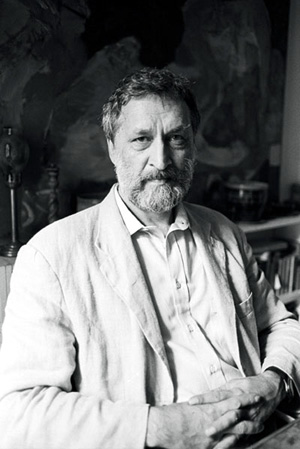
While finishing up edits on an absurdly overdue book of essays by Michael Harris, I came across, in an interview he gave Sonja Skarstedt in 1990, a pretty decent definition of the Signal Editions aesthetic.
I have always been attracted to the writing of so-called “outsiders.” Which is not to say “experimentalists” or whatever, although those are partly included—but people whose voices tend to be somewhat solitary or unique. I have great difficulty with “schools”—the school-oriented poets…that is to say “language” or “sound” or “concrete” poets or whatever kind of group of poets. Because I find that the truely interesting sensibilities come from people who have a unique vision of things and so they’re—I mean, my feeling is that there isn’t any particular “voice” that Signal has—there are a range of poetries written by people who have something unique to say. Or a unique way of saying it. And that is what has always interested me about editing: finding those particular voices of people who have worked something out—one thing, or one way of looking at things.
(Photo by Terence Byrnes)

Saturday, 27 December 2014

The Grand Seduction


In his interview with me, Michael Harris explains some of his methods when editing the Signal series:
A first line literally has to have one hooked immediately. Without a first line that either leads in immediately to a second line hook or a third line hook, there isn’t any poem, you don’t get down to the fourth line usually. It has to be something that doesn’t throw one off. It has to actually bring one in. Reading a poem is a little bit like falling in love. Ten years on, if it was a correct falling-in-love you’re still with them and if it was an incorrect falling-in-love, you’re not with them anymore.

C: Does that thinking affect arrangement in a book? For example, the first poem you place in your manuscript?

M: A friend of mine, the Quebecois poet Michel Garneau, once told me, “Lead with your best piece.” And that makes a kind of sense. He is, amongst other things, an actor and a playwright. And theatrically, what’s interesting is to have something very strong at the beginning. But I don’t think the first poem in a book has to be the best poem. It has to be a poem that is absolutely solid, that doesn’t push one away, that says, “Here I am. I’m a decently written piece. I have subject matter that’s of interest. I have a couple of oddities. A couple of interesting tropes that tell you I’m an interesting poet beyond what one might normally read.” And by the end of the first page, you have to have read something of import. Then the second page and the 3rd page and the 4th page, you can fool around a bit. By the time the 5th or 6th page, then you have to have a plateau poem, a decent poem, a very good poem. Something that’s so good that, had you put it first, you might have lost the reader; it’s a little bit like getting introduced to somebody you don’t know and coming on too strong. That’s how Shakespeare managed the plays. Very seldom is the huge speech in Act 1. The magic develops slowly. By the time you get to Act 3 or 4 there’s strength, power and explosiveness.

C: You don’t want to come on too strong?

M: You want to be absolutely present and inevitable, but you can’t whack somebody over the head and say this is genius. At least, that’s how I would organize the seduction.

Tuesday, 13 November 2012

Lazy Bastardism Reviewed II


Brian Palmu is full of praise for the book, but takes issue with a few things, chiefly my thesis for why Montreal poetry is so distinctive. I think he underestimates the breadth of the code-switching that occurs in the city, but his point is well-taken:
"Speaking of disagreements, the biggest one I have anywhere in Lazy Bastardism comes out of this (mostly quoted) paragraph in the [Michael] Harris’ essay:“But this also reflects the culturally synoptic condition of most Montreal poets, who are constantly forced, on a daily level, to shift between different registers and syntaxes and thus are more open to cross-influences than they might have been had they lived in Toronto or Vancouver or Calgary. ... The city itself, in other words, lures our poems out of the verbal ghetto of what Solway has called ‘Standard Canadian Average’ “. Now this is an argument that is both ignorant and needlessly defensive. I’ve lived a half-century in Vancouver. It is now slightly over 50% Asian, and many of those immigrants have retained their first languages. But it’s not a new development, and it doesn’t pertain to one dialect or ethnicity. Growing up as a wee ankle-biting critic-in-formation, my friends were Fijians, Italians, Slavs, Chinese, Portuguese, Japanese, and Sikhs (as well as a few pasty-faced Brits and Scandinavians). I’m sure I picked up some hidden nuances in all the different cadences, syntactical emphases, cuss-vocabulary expansion, and emotional variance. And I’m sure many in Toronto could say the same since it’s a multicultural pot of stew. So Montreal’s situation in this regard is hardly unique."

Thursday, 10 November 2011

More Praise


Assessing last year's GG poetry shortlist with an open-hearted attentiveness to each of the books, Patricia Keeney has some very kind words for Circus ("an energetic high-wire act that runs on the adrenalin of reforming zeal and the comic anger of satire") and Boxing the Compass ("Technically accomplished, the poems are uniformly paced and assured, telling their stories easily, conversationally.")

Sunday, 6 November 2011

Circus Celebrated


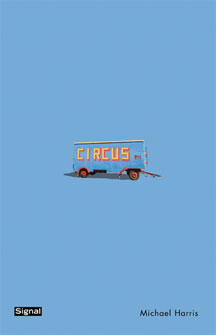
Zach Wells loves Michael Harris' recent collection Circus. "This is formal brilliance," Wells writes in the Autumn 2011 issue of the The Fiddlehead (review not available online), "that has nothing to do with 'formalism' or any other aesthetic dogma." After singling out a number of poems (including my favourite, "Molivos," a longish dream sequence that's set on the Greek island and features actor Ray Liotta) Wells praises the book's range. "Harris's ring is broad enough to accommodate the personal and domestic as well as the world-historical; farce as well as tragedy." Sample poem here.

Thursday, 4 August 2011

ReLit Awards


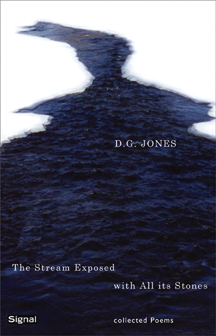
Happy to see Susan Briscoe, Michael Harris and D.G. Jones on the just announced ReLit Awards poetry longlist.

Sunday, 10 April 2011

Sunday Poem


THE BEARDED LADY

I shaved, once. All over. Took a lover
much younger than me—and not for his
conversation. I wanted the feel of a tongue
running over a mouth, slowly—but not
his tongue over my lips, nor mine over his:
I wanted his whole body licking like a tongue
over every new surface of mine. Trouble was,
my stubble. The kid got rug-rash. Carpet-burn.
By the end of the night, the boy looked—uncooked.
When his own sweat began to roast him in salt
he fled to the showers. Haven’t seen him since.

Some time later I married a man
with a skin condition. The soft moss of my belly,
the fur on my face—all titillate the scaly
hide of The Alligator Man. I’m prickly and hirsute.
He’s tough as shoe leather. Neat,
how things turn out.

From Circus (2009) by Michael Harris.

Friday, 15 October 2010

QWF Awards


The cup spillith over. Two Vehicule authors have been shortlisted for the 2010 QWF Literary Awards. Michael Harris' GG-nominated Circus is now up for a second award, The A.M. Klein Prize for Poetry. And Avi Friedman's A Place in Mind: The Search for Authenticity is in the running for The Mavis Gallant Prize for Non-fiction. Winners will be named on Nov. 23.

Wednesday, 13 October 2010

The Gee Gees


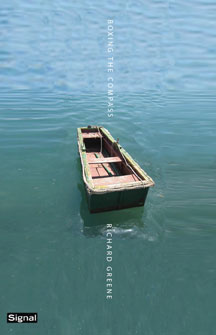
Well, after the drought, a deluge. Just learned that two Signal books were nominated for the Governor General's Award for Poetry: Circus by Michael Harris and Boxing the Compass by Richard Greene.

I honestly can't remember the last time a press had such a strong showing in one category. I'm tremendously proud of these books, especially when you consider the quality of what they were up against.

Here' s how the jury rated them:
Boxing the Compass includes the long, remarkable narrative poem "Over the Border," a poem of chance meetings on American buses and trains. Richard Greene’s writing is restrained in the best sense, striking no indulgent or false notes. One has the impression of a nation in deep trouble as witnessed by a traveler of sympathy and concern.

Circus speaks to the knife-edge of anarchy that underlies the civilization we are asked to accept. Michael Harris tells us that life often disappoints; that sometimes the ridiculous is sublime and sometimes it is just ridiculous. He reveals the unpredictability and mess behind the glitz, glamour and grease-paint of life.
Congratuations to the other nominees: Daryl Hine, Sandy Pool and Melanie Siebert. It's a special honour to share the list with Hine, who is as underrated as they come (Jason Guriel has a very fine essay on him).

Sadly, I'm not familiar with Pool and Siebert's poetry. I'm going to remedy that immediately and order their books today. You should too.

Saturday, 9 October 2010

Recommendations


In anticipation of the GG shortlist announcement on Wednesday, I thought I'd take a moment to mention the Canadian poetry I enjoyed most this year.

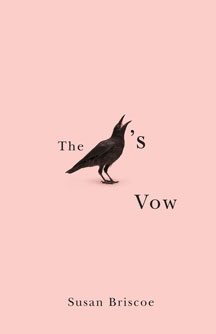
Excluded is The Crow's Vow, a Signal book and therefore, according to industry etiquette, not eligible for objective recommendation. I would, however, like to make a plug (plea?) for Michael Harris's Circus which, except for a couple of notices, has been roundly ignored. And I think that's just criminal.

I suppose I should also disclose that I provided blurbs for two books on this list (Patternicity and Complete Physical). But I don't see why that should make any difference. I blurbed them precisely because I admired them.
For and Against (Goose Lane), Sharon McCartney.
Patternicity (Nightwood), Jim Johnstone.
Bloom (Anansi), Michael Lista
Welling (Your Scrivener Press), Margaret Christakos
Tiny, Frantic, Stronger (Insomniac), Jeff Latosik
Hump (Palimpsest), Ariel Gordon
Complete Physical (Porcupine's Quill), Shane Neilson