Showing posts with label Richard Greene. Show all posts

Saturday, 1 November 2014

A Volatile Dignity


Reviewing Richard Greene's fourth collection, Dante's House, Peter Richardson is wowed by the title poem:
This 32-page tour de force about modern-day Siena, Renaissance art, horse racing, growing cultural amnesia and Italian history is the equivalent of a twelve-foot lake sturgeon. You see it pass underneath your canoe but your punter’s brain takes a few moments to register what has glided past. The poem’s 29 cantos are full of observations about Berlusconi’s Italy superimposed over its 15th–century equivalent, and it brims with wry self-deprecation, sadness, merriment, raillery, loss, tourist headaches, wise locals and Greene’s phenomenally acute traveller’s eye for what makes Siena singular. 
Brian Palmu agrees, calling the long poem "utterly mellifluous and convincing" and considers it the best thing Greene has done.
The poem’s length lets Greene rummage, ruminate, travel without conclusion, stumble, misconstrue, prevail, and “rejoice” with “a power to bless”. “Dante’s House” is more expansive and more concentrated than “Over the Border”, the similarly structured long end-piece to his previous volume which won the Canadian Gov-Gen award. This poem is far more deserving of accolades, and I hope he receives them.
Edward Short thinks the book's success is due to Greene's "deeply human aesthetic":
Greene has taken up and renovated Robert Lowell’s testimonial art, where so much seems a snapshot, / lurid, rapid, garish, grouped, /heightened from life, / yet paralyzed by fact, though even Greene’s bleakest “facts” never leave us with a sense of paralysis. On the contrary, the empathy he shows his subjects reaffirms their volatile dignity.

Sunday, 4 May 2014

Vaulting Iambs

Richard Kelly Kemick reviews Richard Greene's Dante's House in the Spring issue of The Fiddlehead (review isn't available online), giving special praise to the title poem:
"Dante's House," the titular piece, is an ambitious long poem written entirely in terza rima and centering around Siena's horse race, Il Palio. Because of the abundance of rhyme and metre within the poem, it is both highly original and oddly familiar. Greene commits himself unflinchingly to the form throughout the entire poem and "Dante's House" has a fierce musicality allowing it to be tremendously re-readable. Greene's ear for metre and adherence to the chain rhyme pattern entangles the reader in the plot of the poem. The form begs to be read aloud, accentuating the vaulting iambs and phonetic chimes. It is the equivalent of that chorus that so subtly creeps into your ear, goading you to chant percussive beats and miming the drum hit, followed by whatever else makes that second sound.

Saturday, 12 April 2014

Sunday, 20 October 2013

Sunday Poem

YANKEE STADIUM 
‘I didn't really say everything I said.’–Yogi Berra. 

I join hundreds on the platform at Union
Station in New Haven. This is the Yankee Clipper
that carries Connecticut fans to ball-
games in the Bronx. They know what to wear:
white shirts with the names in blue of Gehrig,
Ruth, Berra, Mantle, Mattingly and the rest.
Teenage girls wear halter-tops with blue pinstripes
and the interlocked letters: NY—
all made flirty with spaghetti straps.
Sore-thumb conspicuous, I wear no mark
of loyalty, just a t-shirt, shorts, and a splash
of sun-block for this ninety-degree day.
I get the occasional glance—tolerant,
skeptical or just uncomprehending.
                                       Two hours pass
as we stop at the places where Manhattan
sleeps; car after car fills with families,
beery pals, old men, schoolboys, all partisan
and wry. Then 153rd Street Station
where we wind down paths and between fences.
Two years ago, my son and I went to
the old stadium just to say we’d done it
—been there with the ghosts. That night Mussina
pitched a stinker—just to remind us
of the human condition, I suppose,
while that billion and a half of building
next door, the new stadium, promised something.
The ground is level, but the soaring
walls of pale stone trick the eye; it seems
to stand on a hill. Now the greeters swarm
and they hold signs like ping pong paddles:
‘Can I help you?’ Not really. My task is clear.
I go to a booth, buy a cap, put it on
just so I can feel myself disappear.

In the Great Hall are photographs of old
warriors: I am glad to see Thurman
Munson’s long banner and so many pictures;
a squat grumpy catcher, his numbers used
to hold me each morning, .307
or .312, and the ribbies mounting
in September till he had his hundred.
In 1971, he made no errors at all
until he was knocked cold on the base-path
and was obliged, at last, to drop the ball.
At 32, he crashed his jet near Akron.
Always MVP of a boy’s imagining --
my mind never did retire his number.

Everywhere, in this hall, is the face
of Derek Jeter, balletic shortstop—
known for the high leap, the mid-air turn,
and throw to first. Elegant, good-hearted,
he is the hook they hang the legend on
here in this odd shrine where I too bend down.

I take my seat clutching a huge pretzel
encrusted in an ocean’s worth of salt—
followed on an emergency basis
by a beer. Vendors work the steep aisles
with trays of Budweiser on their heads.
Others shout and hurl bags of Cracker-Jack
with Jeter-like accuracy to middle seats.
Even hotdogs come in a pinstriped box.

There are 45,000 people here
on Tuesday night to see the poor Mariners.
Twenty-seven flags blow towards the outfield.
My seat is good, view obstructed only
by children waving blue styrofoam fingers,
their fathers the famously erudite
Yankees fans who talk the scorekeepers’ code:
Melky drops the ball in centre-field and I hear
a disgusted, ‘E-8, no doubt about it!’

Alex Rodriguez sprints from the dugout—
if that man has an injured hip, may I be
so injured. He gazes up almost over-awed
at the scoreboard, replaying his latest
home runs on the way to a landmark
six hundred. But for all that, A-Rod
lifts no hearts. A-Rod lacks the magic.

I look to the bullpen and think I see
the closer, Mariano Rivera,
his face like a Latino Henry Fonda.
The New York Times says that he was so poor
as a boy in Panama that he learned
to play using a crushed milk carton
for a glove. A friend asks, ‘what did he use for
a ball?’ I don’t know—perhaps a jam jar?
Among priapic athletes he is thought a saint.
When young, he had a religious experience
and even now credits God for his split-
finger fastball; I agree, it is a miracle of sorts.
He prays and gives away heaps of money.
On his glove is stitched chapter and verse,
Phil. 4:13: ‘There is nothing I cannot
do in the one who strengthens me.’
Occasionally, he fails, but he never fears.

Mystique is big business, I suppose;
and razzmatazz is what we buy, knowing
that our strong minds still love all this.
What did the poets and the songwriters
see? What did Paul Simon see? What did
Marianne Moore in her broad hats see?
A chance for the ordinary life to be
a part of the great struggles of the world?
Some hidden tale of youth and age, told
over and over again? It is Santiago
pitying DiMaggio for his bone spurs:
‘Have faith in the Yankees my son.
Think of the great DiMaggio.’ And we know
it is the magic of the thing imagined.
From Dante's House (2013) by Richard Greene 

Sunday, 3 February 2013

Sunday Poem

 
CORRECTIONS 
My friend works medium security and says
Of his mad charges, “You can’t be angry.
They’re sick—shouldn’t be here.” To the near-sane,
he doles punishments when “Fuck you, screw”
is prelude to a shank—some soup spoon snatched
and ground against the whetstone of the bars,
a razor blade bound into a pencil’s
eraser tip, or merely the handle
of a toothbrush made sharp as murder-one.
And stranger things: back in stir after
his biopsy a man threatened to force
a pen through the hole and crush his liver
unless given Tylenol Three. He settled for
Extra Strength and the promise of a doctor:
“I was just joking,” he added meekly,
knowing threats of self-harm bring sanctions too—
days apart in an observation cell,
diaper-clad and deprived of any thing
imagination could turn into a noose.
Others would cut themselves or even rip
open the skin and muscle with their hands;
one inmate slashed deeper than his scrotum,
poured blood and half his entrails on the floor;
luckless, he missed the artery and lived.
Some lifers, almost done, can no longer mount
the stairs to the range or have left their
wits at the scene—time’s muddled fugitives
who could not pick themselves from a line–up.
Beyond correction, a man with one leg
weighs 500 pounds and may no longer lift
himself. Torpid, he pisses and shits among
the blankets, cannot wash or move,
cuffed to a history of offences,
manslaughter (released) and then child rape.
His heart and kidneys wind down—my friend,
tall as a linebacker, joins a staggering
scrimmage of guards and paramedics,
as they hoist the stretcher down stairwells
and across a lighted courtyard to the gate
where an ambulance waits to parole him.

Tuesday, 30 October 2012

First We Take Manhattan


The Best Canadian Poetry 2012 trip to New York last Friday—with well-attended launches at the Lilian Vernon Writer's House and the Corner Bookstore—was a triumph. That's Molly Peacock up there, standing beside me in front of the bookstore (they filled their window with our books, which was a lovely sight). We then celebrated in style with a three-course meal at Pascalou. You'll find a recording of our reading here.

Thursday, 10 November 2011

More Praise


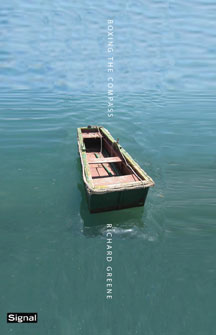
Assessing last year's GG poetry shortlist with an open-hearted attentiveness to each of the books, Patricia Keeney has some very kind words for Circus ("an energetic high-wire act that runs on the adrenalin of reforming zeal and the comic anger of satire") and Boxing the Compass ("Technically accomplished, the poems are uniformly paced and assured, telling their stories easily, conversationally.")

Friday, 23 September 2011

Tuesday, 20 September 2011

Kitchen Sink Editing

Richard Greene says some flattering things about me on the Canada Writes homepage today. Thursday, the tables turn.

Saturday, 16 April 2011

Moonlighting Poets


Over the last year, four Signal poets have published books with other presses. Taken together, the genres represented -- fiction, literary criticism, translation and biography -- are impressive. I think it's a big part of what makes them such superb poets: their poetry is nourished by other sources.

Clockwise from bottom left: Double Talk (Breakwater) by Patrick Warner, Curious Masonry: Three Translations from the Anglo-Saxon (Gaspereau) by Christopher Patton, Fine Incisions: Essays on Poetry and Place (Porcupine's Quill) by Eric Ormsby and Edith Sitwell: Avant-Garde Poet, English Genius (Little, Brown) by Richard Greene.

Friday, 15 April 2011

Green Day


Two more Richard Greene interviews have surfaced recently (aside from this one, I mean). A quickie with The Toronto Quarterly (which comes with a nice except from Boxing the Compass) and a longer chat with Rob McLennan, in which Richard describes his work as "an odd mix of religious vision, gags, social satire, and elegies." I wish I'd thought of that for the back cover!

Saturday, 2 April 2011

Greene Interview

Over at Northern Poetry Review, Carmelo Militano interviews Richard Greene on his GG-winning book, Boxing the Compass.

"Here are all these Canadian poets -- I'd say nearly half -- entertaining religious beliefs that they fear to talk about in poetry. It is like earlier centuries fearing to talk about sex in poetry. Even so, technique is learned from other poets, and if the religious themes are in disrepute, it is very hard to develop, in relative solitude, a technique for addressing them. It is something I think about a fair bit."
More here.

Thursday, 16 December 2010

Books of the Year

After providing year-end recommendations for 2008 and 2009, I thought I'd try something different this time. I asked some Signal poets (present and future) for books they enjoyed in the last twelve months. Here's what I got back.

Mark Callanan
I don’t know if I’d call it the “best” book of the year, and it wasn’t actually published in 2010 (so I’m delinquent on two accounts), but Luke Kennard’s The Harbour Beyond the Movie (Salt) is something that caught my attention earlier this year. I’d read his poem “The Murderer” in a Forward anthology a couple of years back and was blown away by it (Mob-style execution, multiple Tommy guns—think Sonny Corleone’s toll bridge death scene). It was one of those poems that confounds and delights, that makes one think: Oh, you can do that with poetry? Who knew? The whole collection, in fact, is exhilarating and disorienting, proceeding as it does by surreal narratives, like fun-house mirrors that make the familiar foreign, and in so doing, underline the modern world's many absurdities.


Mary Dalton
This year has been such that I've fallen a bit behind in reading the books of the year--am catching up on some of last year's, indeed. One that I thought highly of from 2009 is John Glenday's Grain (Picador) Daryl Hine's serial poem & (Fitzhenry & Whiteside) comes to mind among this year's books.


Susan Glickman
Steven Heighton's Patient Frame (Anansi) is a formally elegant and morally resonant book, ranging in topics from the political to the domestic. The collection includes tributes to those who resisted evil, such as Warrant Officer Hugh Thompson, who stopped the My Lai massacre "as if to save was also labour/ for male arms", as well as to
The small-scale makers of precious obscurios—pomegranate spoons, conductors' batons, harpsichord tuning hammers, War of 1812 re-enactors' ramrods, hand-cranks for hurdy-gurdies.
It excoriates a child-molesting choir-master
who–while earth slowly unstrings a boy
in his lento measure of staved ground—
still savours the tang
of August tomatoes, chords of Fauré’s Requiem
(two years served, in fairway minimum)
and the rectifying esteem of upstanding Ang-
lican pals.
as well as pondering how and when one stops reading bedtime stories to one’s child:
How does the end enter? There's a hinging
like a book's sewn spine in the raw matter
of time—that coded text, illegible—
and stretched too far, it goes.
As these examples suggest, the book is full of those frissons of recognition that make reading poetry a way of reintroducing one to one's own soul.


Richard Greene
I'll plunk for Derek Walcott's White Egrets (FSG). Long line, large rhetoric, he takes the kind of risks that terrify Canadian poets. The form honours the largeness of an impassioned life. He grieves, he regrets, he returns from exile, he prepares to die, and he turns it all to music.


Jason Guriel
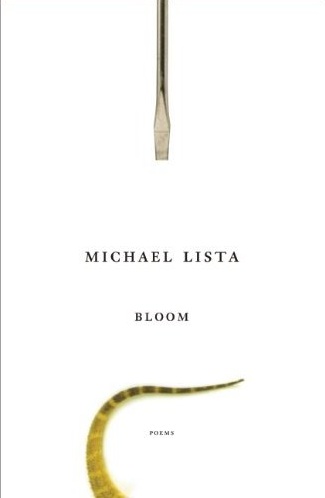
Bloom (Anansi) by Michael Lista is a first book of poetry that will give its creator no cause to wince in the years to come, and ought to put the rest of the literary world on notice. It isn’t juvenilia or, worse, promising. Instead, like Joyce’s Ulysses and Lennon and McCartney’s “A Day in the Life,” Lista’s assured book speaks fluently in various tongues as it takes the measure of an apocalyptic final day in one's scientist's quiet life.


Jason Guriel
I’ve been reading Christian Wiman’s third collection, Every Riven Thing (FSG), for a few years now, which is to say I’ve made sure to keep up with the magazines smart enough to publish its excerpts. Wiman writes instant classics that speak for themselves, speak about grief and God, and all but demand to be quoted: poems in which a tree “seems cast / in the form of a blast / that would have killed it,” and “leaves shush themselves like an audience,” and “wind seeks and sings every wound in the wood.”


Tuesday, 30 November 2010

Monday, 29 November 2010

Black Tie, Long Dress

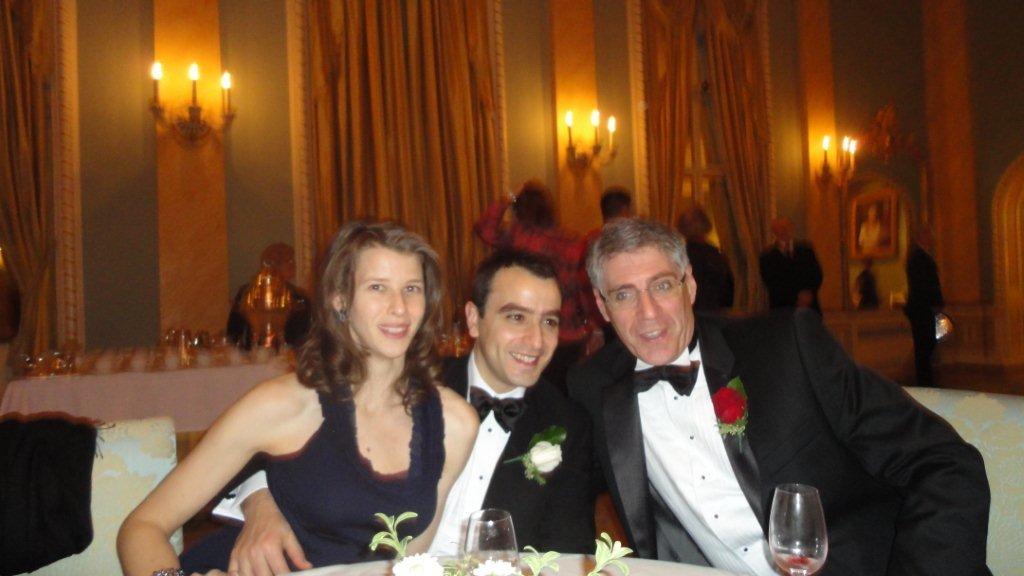
Simon and Richard in the green house.


These lovely ladies (starting from the left) are my wife, Jennifer Varkonyi, and Richard's wife, Marianne Marusic.


Saturday, 27 November 2010

The Rideau Boys

Richard and me at the GG awards presentation on Thursday night, courtesy of Max Middle who has assembled a slideshow here. I'll let you know as soon as more pics become available.

Saturday, 20 November 2010