Thursday, 4 August 2011

Brian Busby


Interviewed about his blog The Dusty Bookcase and its "attempt to save Canadian books that are in danger of disappearing," Brian Busby reveals why -- especially when it comes to John Glassco -- he's one of the sharpest literary minds in the country:
JW: What do you think Glassco would make of the James Frey controversy and the rise in popularity of creative non-fiction? Did Glassco consider himself a made-up self? I'm also trying to imagine what Glassco would do with social media, if he would subvert or embrace it.

BB: It's interesting to consider what relationship, if any, Glassco might have had with social media. He was, at heart, very much an Edwardian... We see this in his final fantasy, Guilt and Mourning, an unpublished novel set in a Montreal that has somehow avoided the technological advances of the 20th century. Had Glassco lived to be a centenarian—or even a mere nonagenarian—I very much doubt that he would have taken to social media except in one key area: his sex life. Here, the world would have become a less lonely place. I dare say it would be much easier to meet people who shared his interests over the Web than through personal ads.

As to Frey, I wonder how much attention Glassco would have paid the controversy; he had so very little interest in the prose of his own time. That said, he did enjoy a good hoax—and perpetrated some of the very best. We might get a sense of his reaction to the Frey controversy through his own memoirs. In a letter to Kay Boyle, he writes, "I look on the real value of 'memoirs' as being not so much a record of 'what happened' as a re-creation of the spirit of a period in time." So he telescopes and rearranges time, invents dialogue and encounters, dresses "naked facts" and in the end produces a work that Malcolm Cowley considered "the most accurate picture of Montparnasse".

One might say that he did something similar in life; choosing what and with whom to share specific details. We all do the same thing—though perhaps not to the same extent. Glassco wrote a beautiful and insightful passage about this very aspect of human life in writing about Casanova:

"We end, in other words, by loving him as much for what he really was as for what he tells us he was, and discover that the two characters complement each other and make an intelligible whole. In this way we grasp the truth that man is not only a living creature but the person of his own creation"
Read the rest here.

ReLit Awards


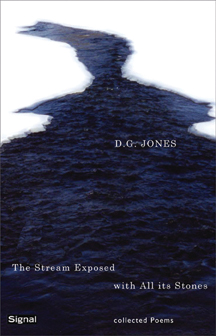
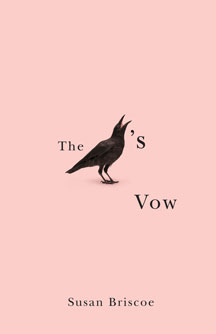
Happy to see Susan Briscoe, Michael Harris and D.G. Jones on the just announced ReLit Awards poetry longlist.

Sunday, 31 July 2011

Sunday Poem

IDLENESS

Drawing a treble clef
on the wall with my eye,

squinting at a chandelier
till each bulb in its red fez sprouts
vibrating bristles,

counting flies in a museum cafeteria
next to a table
where two lovers are coming apart
with long talk and whole minutes
of horrified silence:
they are doing this terrible thing,
unwrapping their sadness
and showing it
to one another.
It is so awful how their voices
tremble
but notice
the idleness of their hands
stacking coins,
pushing crumbs with a bank card,
breaking chunks from the rim
of a disposable cup
and placing these inside the cup until
there isn't a cup to contain them,
just a small pile of styrofoam chips.
From Facts (1998) by Bruce Taylor.

Thursday, 28 July 2011

QUILL BLOG ON FISH QUILL

Quill & Quire covers the second installment of Fish Quill Poetry Boat, a nine-day canoe-powered reading tour down the Grand River, travelling from Elora to Ohsweken. (Organizers embarked on a similar trip last year. Write-up here.) The eight-poet team includes Signal authors Linda Besner and Asa Boxer. They get paddling August 4th.

Sunday, 24 July 2011

Sunday Poem


THE BOAT

It was quite the rigamarole—
first the report of the broken boat
found high and dry in a bed of petunias,
then the tale of how it had sailed down
out of the heavens on a cold rainy Tuesday—
out of the great galvanized bucket of the heaving sky—
each of us knew what to make of it.
The mayor proposed a stern letter be written;
the councillor shuffled his ordinances.
The police dogs searched it for drugs.
The priest prayed for the drowned crew.
The biologist listed the worms and the sea-lice.
The woodcarver filled out some forms for the planks.
The camera man assembled his sepia lenses.
The psychologist warned of a wave of hysteria.
The evangelist read signs of the pending apocalypse.
The love-sick boy notched her name in the hull.
The real-estate agent cooked up a deal.
The historian ransacked his files for parallels.
The artist dreamt of a cottage conversion;
the politician sized up the tourist potential.
The carpenter said it was a big job to fix her;
the hardware men boxed up all sizes of nails.
The poet tossed off an exquisite ode;
the adman was sure he could mount a campaign.
Axe in hand, the fire chief rose to the occasion.
The pigeons were glad of a new perch.
It was quite the ballyhoo. Then,
while they were arguing among themselves
the boat lifted itself up out of their element,
into the blue—its battered planks clattering,
its twisted keel an inward grin—
and moved crazily on.
From Red Ledger (2006) by Mary Dalton

Saturday, 23 July 2011

Chicks With Swords


Chief among the highlights of the July/August issue of Poetry (which includes a lovely poem by Amanda Jernigan and a ferocious essay by Joshua Mehigan) is A.E. Stalling's translation of Plutarch's anecdotes on Spartan women.
A woman who had sent her five sons to war waited anxiously outside the city and asked a man approaching which way the battle was going. When he replied that her sons had all perished, she retorted, “You sorry slave, that’s not what I asked.” When he said Sparta was winning, she said, “In that case, I gladly accept the death of my sons.”

•

Another gave her son a shield as he set out for war, saying, “Your father always saved this for you. Keep it safe, not yourself.”

•

Another, when her son complained his sword was too short, said, “Step forward: add a foot to it.”

(Painting by Edgar Degas, "Young Spartans Exercising.")

Friday, 22 July 2011

The Already Said


Over at The Atlantic, John Barth provides a reality check on originality:
When the eminent Italian critic and novelist Umberto Eco visited Johns Hopkins some decades ago, he spoke of the problem, for contemporary writers, of the “already said”: the circumstance that because Homer, for example, spoke so memorably in The Odyssey of the “wine-dark sea” and of “rosy-fingered Dawn,” nearly 3,000 years’ worth of poets and storytellers have had to find other images for sea and sunrise—a task that must become increasingly difficult as the repertory of possibilities is exhausted.