Showing posts with label Asa Boxer. Show all posts

Sunday, 1 May 2016

Sunday Poem

INCLUSION 
First was the claw and the claw
clasping clay, closing in breath. 
More turns to them than to sea-snails,
brain and gut ravelled like yarn 
into clews to be threaded through.
Like Theseus, I was closed-in 
with an abomination of bestial desire:
she wanted to be nailed by a bull 
and she did a bull and bore
a bull-of-a-thing with a menacing club. 
It's with this thought that I'm locked,
throughout this maze that I travel. 
I've no key, no clue: only minatory echoes
and shadows to see it through.

By Asa Boxer, from Etymologies (with essay by David-Antoine Williams, 
Anstruther Press, 2016)

Monday, 27 April 2015

Flash Interview #10—Asa Boxer


Asa Boxer is the co-founder of The Montreal International Poetry Prize. This year's $20,000 award is being decided by Eavan Boland. Deadline for entries is May 15.

Carmine Starnino: The Montreal International Poetry Prize continues to be the only award of its kind—delivering a huge sum for a single poem. What's the thinking there? Why the focus on the poem?

Asa Boxer: We wanted to signal to audiences that the poem is a work of art, at least as valuable as other, perhaps more visible art forms. Folks are willing, for example, to pay to see theatre, dance and film. I'm not sure a poem has equal purchase on wallets. Meanwhile the visual arts are currently in the midst of a parody of value, where a painting that fetches a mere six figures is a sign the creator has achieved only moderate success. So the idea, in part, was to announce loud and clear to a culture obsessed with measures that poetry had measurable value.

Back in 2010, when the idea of the Montreal Prize was conceived, there were few prizes offering big purses to poets. Mostly it was collections of poems that had a chance of landing a significant prize amount. The poetry competitions that awarded the largest amounts for single poems were old in 2010, and the sums they offered had lost their glimmer. We hoped to nudge those up by example. In many cases, literary journals were offering thousands to the winner of a short story competition, while insulting poets with a paltry sum, as though poems were what you wrote during a commute or during a lunch break. The message was, don't bother with this minor art form, nobody really wants it. We wanted to change that. So we designed a prize that would award tens of thousands for a single poem, no longer than forty lines.

CS: The prize's internationalism has ramped up considerably since its inception, with your current editorial board featuring poets from Trinidad, Nigeria and India. Why make the enterprise so diverse?

AB: I'd say we always had a strong international editorial board. What's changed is how far we can reach into poetry circles that were remote in 2010. By asking for recommendations from our African, Caribbean, Indian and Australian sources, we can now get to emerging poets and poets who were not in the major anthologies but clearly should have been. Then we can invite them to join our editorial board for a season or encourage them to participate as contenders in the competition.
The desire for this sort of diversity is rooted in curiosity and a desire to expand our notions of what poetry can be. Just as Ezra Pound looked to foreign poetries (like Japanese) to learn other approaches and techniques in the medium, the Montreal Prize hopes to keep apace of how folks are writing in different countries and to be a vehicle of cross pollination.

CS: What are some trends you've seen in submissions over the last few years? Is English-language poetry in good health?

AB: Happily, I haven't seen trends in the sense of fashions. In other words, our anthologies haven't represented a dominant style or subject. There has been diversity on that front. I'm not in a position to say whether English-language poetry is in good health. It has become an industry, though, which is antithetical to its spirit: there are mechanisms that keep the presses running whether the material is worth printing or not. I suspect also that globalization along with the Creative Writing Program have contributed to what looks like an unnerving uniformity of expression. I have definitely seen less culturally inflected diversity than initially hoped for. For example, I suppose Caribbean folk couldn't keep writing in pidgin, but it's as though the sound of their work (on the page at least) has lost that Caribbean lilt and swagger. Things are in flux right now, I can say that much. The UK, for instance, once a leader in the poetry world, is now on a par with everyone else. The best African poetry seems the most urgent and most distinct. I think poets ought to be turning their attention there right now.

Sunday, 22 December 2013

Negative Reviewing as Catharsis


Asa Boxer unpacks the ways in which a negative review might prove useful. The most important reason?
[H]ow it corroborates and articulates the feelings of certain readers. For those like myself, the moment of contact with a negative review with which one identifies can be at once a cathartic and inspiring aesthetic experience: it feels like one is no longer alone. This is especially positive for those who feel alienated from current writing trends and suspect that something mysterious and beyond their understanding is afoot, and who probably question their own sanity until they meet a kindred spirit in person or in print. 

Thursday, 6 December 2012

Dark Horse


I've put together a small selection of Canadian poets for the Autumn/Winter 2012 number of the excellent Scottish-American literary magazine The Dark Horse. I first heard of The Dark Horse in 1999 when, during a fellowship at the Hawthornden Castle, I paid Stewart Conn an afternoon visit at his home in Edinburgh. Just as I was about to leave, Stewart pressed a copy of the journal into my hands, and encouraged me to send them poems. I never did, but I finally meet the editor, Gerry Cambridge, at the West Chester Poetry Conference in 2010. I was there with Robyn Sarah, Bruce Taylor and Molly Peacock for a panel on Canadian poetry.  At one point during the conference, Gerry began distributing recent issues of the magazine, which, in the intervening years, had clearly taken a quantum leap in terms of design and direction. We struck up a series of conversations which continued into an email correspondance (I soon became a subscriber). I know Gerry would love to see more submissions—and subscribers!—from this side of the pond. A long review of Todd Swift and Evan Jones' anthology Modern Canadian Poets appeared in issue 26.

Saturday, 24 November 2012

The Best Canadian Poetry 2012, Montreal Launch

One selling point, for me, of The Best Canadian Poetry 2012 is its robust selection of Montreal poets. Evidently I'm not alone in feeling that way. Turnout at the November 9th event, held at Argo books, was incredible, with many being turned away at the door. Photos courtesy of Meaghan Thurston.

Minutes before the reading

Poets waiting in the wings

Stephanie Bolster

Nyla Matuk

Kirya Marchand

Joshua Trotter

David McGimpsey

Asa Boxer

Geoffrey Cook

Todd Swift

The passing of the manuscript


Thursday, 22 December 2011

Holiday Recommendation, Ctd

"A delight to read and read again. Asa Boxer is a true master of language—and he knows it. This collection [Skullduggery] is at once belly-shakingly funny, piercingly insightful, ironic, and melodically composed. If poetry was ever 'meant' to be some way, this is it." —Jury citation for the 2011 QWF A.M. Klein Prize for Poetry.

Friday, 7 October 2011

2011 QWF Awards Shortlist

How cool is this? The QWF announcement went out this morning and Vehicule snagged three nominations. Congratulations to all the authors.


Asa Boxer's Skullduggery (Signal Editions) nominated for the A.M. Klein Award for Poetry.

"Boxer delights in the creative powers of language: he infuses life into every object, he explodes and implodes those objects, he creates alternate histories and secret lives for them, he imbues them with progeny. –ARC Poetry Magazine

Sample poem here.


Dimitri Nasrallah's Niko nominated for the Paragraphe Hugh MacLennan Prize for Fiction.

"Nasrallah possesses superb powers of description. With a few deft strokes, he delivers a character’s essence and motivations. His idiosyncratically scarred landscapes shimmer in exotic hues. "– Globe and Mail


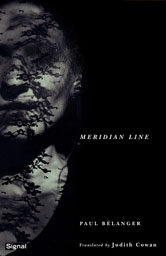
Judith Cowan's Meridian Line (Signal Editions) nominated for Cole Foundation Prize for Translation.

"Cowan offers not only a dependable reproduction of the prior receuil but an autonomous creation which engages by the freshness of its diction and the ingenuity and resourcefulness of its metrics." -- Books in Canada


The winners of all of the book prizes will be announced at the annual QWF Literary Awards Gala at the Lion d’Or (1676 Ontario E.) on Tuesday, November 22 at 7 p.m.

Tickets to the QWF Gala are $15 ($10 for full-time students with ID) and will be available soon at the following bookstores: Argo Books, Babar en ville, Bibliophile, Clio Bookstore, Paragraphe Bookstore, and The Word. Tickets will also be available at the QWF office and at the door (space permitting). For ticket information, call (514) 933-0878.

Thursday, 28 July 2011

QUILL BLOG ON FISH QUILL

Quill & Quire covers the second installment of Fish Quill Poetry Boat, a nine-day canoe-powered reading tour down the Grand River, travelling from Elora to Ohsweken. (Organizers embarked on a similar trip last year. Write-up here.) The eight-poet team includes Signal authors Linda Besner and Asa Boxer. They get paddling August 4th.

Sunday, 10 July 2011

Friday, 8 April 2011

They're in!


Our Spring poetry titles: The Id Kid by Linda Besner and Skullduggery by Asa Boxer.

Three Way

If you wanted to list the young poets who were likely to figure in many of our literary conversations over, say, the next decade, you could hardly do better than the names on this poster. And I'm happy to say two of them are ours. It's going to be a great reading. See you there?

Wednesday, 6 April 2011

And Speaking of Prizes

Asa Boxer (seen above) and Len Epp sit down with Encore magazine to talk about the $50,000 poetry prize they've just launched.

Saturday, 2 April 2011

Saturday Poem


Night Shift

The owl skirrs for mouse
and in his gut, he turns her
inside-out. The bat weaves

through the criss-cross trees,
wings upon her sonar pings
to trap the bug and feel him sing.

Owl, wise anatomist, studies
the tissues, then spits the gist:
the shag and bone of what exists.

And bat, dread acrobat, flips
the forest upside-down, and all
the creatures underground,

the shrew, the hedgehog and the mole
fall out like rattled soldiers
from their tunnelled holes.

From Skullduggery, by Asa Boxer, which will be launched April 17.

Thursday, 31 March 2011

How Much?

Signal poet Asa Boxer -- whose second book of poems, Skullduggery, is out next month -- was in the news today about the gobsmackingly lucrative poetry prize he's just co-founded.

You can ask him about it on Friday, April 29, 2011 at 6pm when Asa will appear, along with five other poets, at a reading I'm hosting: Blue Met's "Poets at Night: Changing Landscapes, Eclectic Voices."

Sunday, 21 November 2010

Coming Attractions


I’m nearly a month late in posting this, but I want to thank Jacob McArthur Mooney for including Mark Callanan’s upcoming book on his list of 2011 recommendations.

For anyone on the lookout for more CanPo offerings, we’ve assembled a really solid roster next year, with Asa Boxer and Linda Besner teaming up this Spring (her cover above). Anita Lahey joins Mark in the Fall.

I’ll be first in line for Julie Bruck’s Monkey Ranch, to be published by Brick (check out the Fall issue of Maisonneuve for some wonderful poems from the book). In the meantime, I’ll point poetry fans to the John Glassco biography A Gentleman of Pleasure, by Brian Busby, out in March from McGill-Queen's University Press, as well as my own selection of Glassco poems that Frog Hollow will be publishing around the same time.

Tuesday, 26 October 2010

Early Warning Systems


This friday, October 29, Asa Boxer, Anita Lahey and I will appear with three francophone poets (Vincent Charles Lambert, Rosalie Lessard, Thomas Mainguy) at a bilingual reading organized by DHC/ART Foundation as tribute to American artist Jenny Holzer. The event is called Early Warning Systems: Inflammatory Poetry by Six Montreal Poets (the title is lifted from one of Holzer's pieces), and it takes place in the Maxwell-Cummings Auditorium at the Musée des Beaux Arts de Montreal. 7pm. 1379 Sherbrooke Street W. Admission is free. Please come.


Friday, 23 January 2009

Verbal lovemaking


Charles Durning Carroll reviews Asa Boxer's The Mechanical Bird (2007).

Boxer's "focused attention on what we otherwise pass over works as a kind of verbal lovemaking."

Tuesday, 20 January 2009

The Good Soldier


Signal poet Asa Boxer's fascinating 2007 article on his stint in the IDF has just gone live on the Maisonneuve website.

"In 1993, I packed a rucksack and hopped on a flight to Israel to seek my fortune. It was the year of the Oslo Accord. I still recall the images: a trembly Arafat hesitating, then refusing to sign one of the pages at the last moment; Rabin’s reluctant handshake afterward; and, of course, Clinton’s beaming face overseeing the televised episode. For the next four years (which included Rabin’s assassination and Netanyahu’s rise to power), Israelis were able to focus on more than survival. It was a period of economic boom, despite the regular bus bombings in Jerusalem where I finally settled."

Read the rest here.